At Grace, LGBTQ+ people are welcome to participate fully in all areas of ministry and parish life.
At Grace, we believe in the full inclusion of LGBTQ+ people in the life of this church and equality under the law for all. We acknowledge the harm done by religious institutions that have weaponized our scriptures and traditions to support discrimination and oppression of LGBTQ+ people of faith throughout history. We are committed, through our ministry, to fight against this ongoing injustice and to show all LGBTQ+ people that they are beloved by God. We welcome all to worship with us and to serve as leaders and members of our life, worship, and governance.
Here are some of the ways we live into our ministry of welcome to LGBTQ+ people.

Grace is a parish of The Episcopal Church, which affirms LGBTQ+ people in every order of ministry.
Due to the physical limitations of our building, we do not have a single-stall, gender-neutral restroom. However, we have proudly posted a sign outside our restrooms inviting all to use the restroom that best fits their gender identity. We hope that this is a small step in making our transgender siblings feel welcome within our walls.
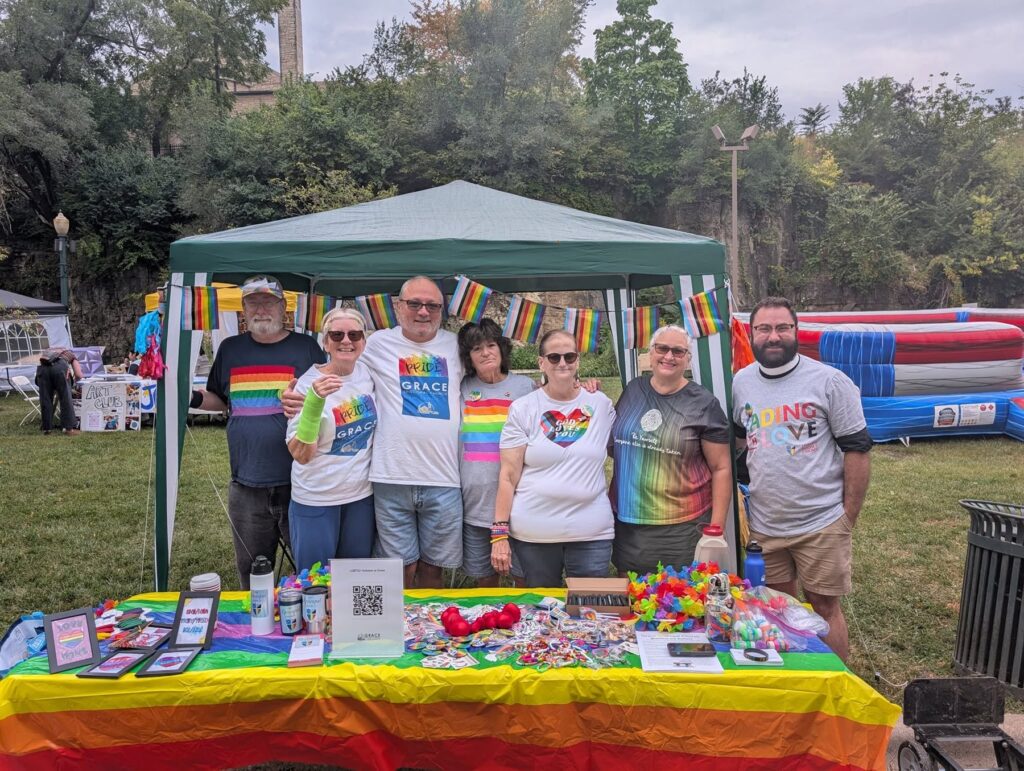
Each September, we have a table at Joliet Pride Fest. We pass out rainbow-colored goodies, share information about the church, and have meaningful conversations with passersby about harms that have been done to them by religious institutions in the past and our belief that God loves them exactly as they are. This is an important outreach ministry of this church, sharing Christ’s love to those who have been told the church has no place for them. It is also a blast! If you would like to volunteer at the next Pride Fest, please contact the church office at [email protected].
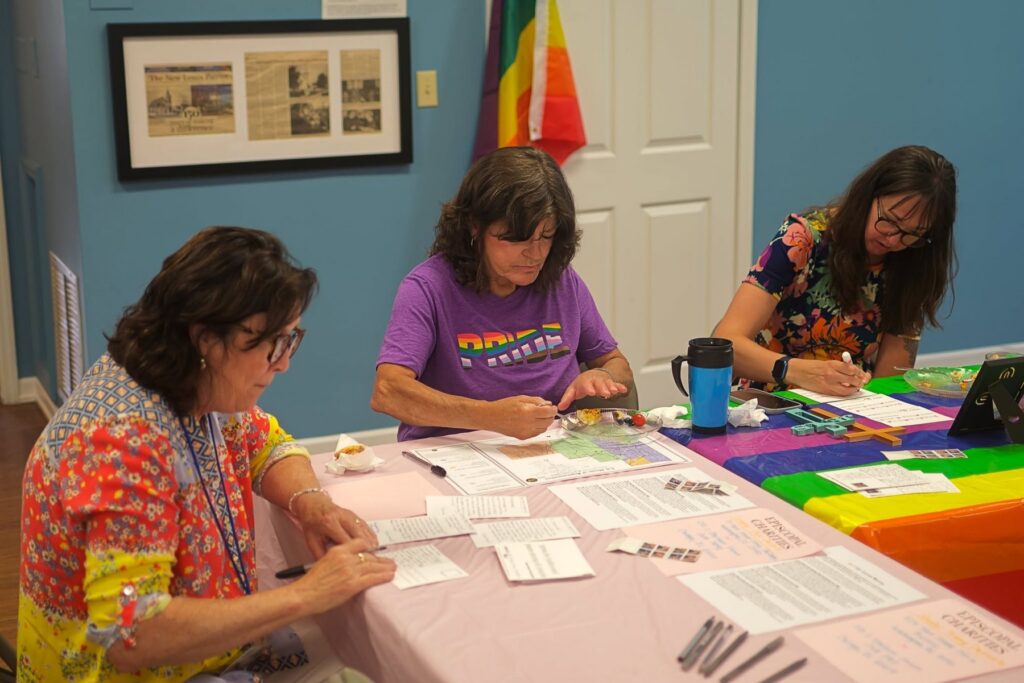
Each June, we have a special service celebrating God’s love for our LGBTQ+ siblings. Our service is filled with special inclusive hymns and prayers reminding us all that love comes in many forms and that all of those forms are a reflection of God in the world. The service is followed by a festive, rainbow-filled coffee hour.
Some of the natural questions about sexuality, the LGBTQ+ community, our denomination and our understanding of God’s love.
No. Sins are acts that separate us from God and keep us from loving our neighbors as ourselves. Being gay is not a sin. Bullying is a sin. Being hateful to other people is a sin. Putting yourself in the place of God to judge others is a sin. Being gay is not.
Jesus said the same thing about gay people that he said about all people: God loves you beyond your wildest imagining and calls you to walk in love with God and with each other. He also said a whole lot about welcoming the stranger, embracing the outcast, ministering to the marginalized and loving — not judging — your neighbor.
The short answer is no, it does not. The handful of passages in the Old and New Testaments that talk about God condemning specific sexual acts have nothing whatsoever to do with sexual orientation and everything to do with contexts such as cultic prostitution or gang rape. The word homosexual did not even appear in the Bible until 1946!
First of all, God’s nature is to love, not to hate. We believe that what God cares about is not our sexual orientation but our theological orientation — and that the question that matters is not “who do you love?” but “do you love?” Recognizing that homophobia causes some folks to project onto God their own fears, prejudices, and biases against LGBTQ+ people, sometimes the best response is simply no response. It can be a challenge but getting triggered by hate-mongers prevents us from being the change we want to see.
The same place all God’s beloved children fit in: smack dab in the center of God’s care, love and desire for health and wholeness for every single human being.
God doesn’t make mistakes — but we do. And we make a mistake when we project our own narrow, binary understanding of gender onto the complex, beautifully diverse continuum of humanity God created and we are still learning to understand. It’s the same mistake we make whenever we project our own finite knowledge onto God’s infinite creativity and capacity to love. It’s the first mistake human beings made in the Garden of Eden by presuming that they could be like God by eating the fruit of the tree of knowledge. And it’s a mistake God had a response to in one of our most ancient scriptural texts — Job 38:2 “Who is this that obscures my plans with words without knowledge?” God doesn’t make mistakes — we do. So let’s not make the mistake of failing to fully embrace our transgender/nonbinary siblings wherever they fall on the continuum of gender identity.
Tell them that Jesus said absolutely nothing about being gay, but he said a lot of things about judging other people. Then tell them that while there is no consensus among scientists about the exact reasons that an individual develops a heterosexual, bisexual, gay, or lesbian orientation, there is consensus that sexuality is a continuum. So the “choice” is not to be gay, straight or somewhere in between; the “choice” is to build our own healthy relationships — and give other people the grace to build theirs.
Remind them that the First Amendment protects them in believing whatever they want to about what God does or does not bless, but it also prohibits them from using those beliefs to decide who the Constitution protects or doesn’t protect. Tell them to stop confusing their theology with our democracy. And then campaign for and donate to their opponent in the next election cycle.
They are wrong. The Constitution already protects their right to exercise their religion. It does not protect their right to impose their religion. Just as using the Bible to justify racial segregation was wrong in the 1960’s, using it to justify LGBTQ+ discrimination is wrong today.
Both. Questioning means someone who is figuring out their gender identity and/or figuring out how they want to identify their sexual orientation. Queer is not specific to sexual orientation or to gender identity but is more of an umbrella term for anything that exists outside of the dominant hetero-centric narrative. Originally pejorative for gay, it is now being reclaimed by some gay men, lesbians, bisexual, and transgender persons as self-affirming language.
You may also see the acronym LGBTQIA. The additional “IA” is added to include those who identify as intersex/intergender and asexual. Some iterations of the acronym also add a “+” sign at the end, symbolizing the inclusion of all other identities.
Yes, it’s complicated. It is also not at all surprising that as we grow in both our understanding and experience of the complicated continuum of sexual orientation and fluidity of gender identity/expression our language will grow and change as well.
Yes. We believe what matters in a marriage is the love between two people, not their gender. In 2015 the Episcopal Church changed our canons (church laws) to provide equal access to sacramental marriage for both same and opposite sex couples.
No. If you need to pray away something, pray away homophobia. Homosexuality doesn’t need healing. Homophobia does.
Ultimately, the most important message we have to offer is that whoever you are, and wherever you find yourself in the alphabet, there is a place for you here.
[Adapted from FAQs about Jesus, the Bible, and LGBTQ+ People by Susan Russell, All Saints Church, Pasadena]